

Phospho-NFκB-p100 (S865) Polyclonal Antibody, 100 µg, (ATB-P0181)
$238.00
- Description
- Size Guide
- Reviews (0)
Description
Background:
NF-kappa-B is a pleiotropic transcription factor present in almost all cell types and is the endpoint of a series of signal transduction events that are initiated by a vast array of stimuli related to many biological processes such as inflammation, immunity, differentiation, cell growth, tumorigenesis and apoptosis. NF-kappa-B is a homo- or heterodimeric complex formed by the Rel-like domain-containing proteins RELA/p65, RELB, NFKB1/p105, NFKB1/p50, REL and NFKB2/p52. The dimers bind at kappa-B sites in the DNA of their target genes and the individual dimers have distinct preferences for different kappa-B sites that they can bind with distinguishable affinity and specificity. Different dimer combinations act as transcriptional activators or repressors, respectively. NF-kappa-B is controlled by various mechanisms of post-translational modification and subcellular compartmentalization as well as by interactions with other cofactors or corepressors. NF-kappa-B complexes are held in the cytoplasm in an inactive state complexed with members of the NF-kappa-B inhibitor (I-kappa-B) family. In a conventional activation pathway, I-kappa-B is phosphorylated by I-kappa-B kinases (IKKs) in response to different activators, subsequently degraded thus liberating the active NF-kappa-B complex which translocates to the nucleus. In a non-canonical activation pathway, the MAP3K14-activated CHUK/IKKA homodimer phosphorylates NFKB2/p100 associated with RelB, inducing its proteolytic processing to NFKB2/p52 and the formation of NF-kappa-B RelB-p52 complexes. The NF-kappa-B heterodimeric RelB-p52 complex is a transcriptional activator. The NF-kappa-B p52-p52 homodimer is a transcriptional repressor. NFKB2 appears to have dual functions such as cytoplasmic retention of attached NF-kappa-B proteins by p100 and generation of p52 by a cotranslational processing. The proteasome-mediated process ensures the production of both p52 and p100 and preserves their independent function. p52 binds to the kappa-B consensus sequence 5′-GGRNNYYCC-3′, located in the enhancer region of genes involved in immune response and acute phase reactions. p52 and p100 are respectively the minor and major form; the processing of p100 being relatively poor. Isoform p49 is a subunit of the NF-kappa-B protein complex, which stimulates the HIV enhancer in synergy with p65. In concert with RELB, regulates the circadian clock by repressing the transcriptional activator activity of the CLOCK-ARNTL/BMAL1 heterodimer.
Product datasheet:
Overview | |
| Product Description | |
| Species Reactivities | Human,Mouse,Rat |
| Immunogen | Synthesized peptide derived from human NFκB-p100 around the phosphorylation site of S865. |
Properties | |
| Form | Liquid in PBS containing 50% glycerol, 0.5% BSA and 0.02% sodium azide. |
| Storage Instructions | -20°C/1 year |
| Clonality | Polyclonal |
References:
- Cloning of an NF-kappa B subunit which stimulates HIV transcription in synergy with p65.
Schmid R.M., Perkins N.D., Duckett C.S., Andrews P.C., Nabel G.J.
Nature 352:733-736(1991) [PubMed] [Europe PMC] Cited for: NUCLEOTIDE SEQUENCE [MRNA] (ISOFORMS 3 AND 4). Tissue: Leukemia. - A novel mitogen-inducible gene product related to p50/p105-NF-kappa B participates in transactivation through a kappa B site.
Bours V., Burd P.R., Brown K., Villalobos J., Park S., Ryseck R.P., Bravo R., Kelly K., Siebenlist U.
Mol. Cell. Biol. 12:685-695(1992) [PubMed] [Europe PMC] Cited for: NUCLEOTIDE SEQUENCE [MRNA] (ISOFORM 1). - Rearrangement and altered expression of the NFKB-2 gene in human cutaneous T-lymphoma cells.
Thakur S., Lin H.C., Tseng W.T., Kumar S., Bravo R., Foss F., Gelinas C., Rabson A.B.
Oncogene 9:2335-2344(1994) [PubMed] [Europe PMC] Cited for: NUCLEOTIDE SEQUENCE [MRNA], CHROMOSOMAL TRANSLOCATION, P80HT GENERATION. - Rabson A.B.
Submitted (FEB-2006) to the EMBL/GenBank/DDBJ databasesCited for: SEQUENCE REVISION. - Cloning of human full-length CDSs in BD Creator(TM) system donor vector.
Kalnine N., Chen X., Rolfs A., Halleck A., Hines L., Eisenstein S., Koundinya M., Raphael J., Moreira D., Kelley T., LaBaer J., Lin Y., Phelan M., Farmer A.
Submitted (AUG-2003) to the EMBL/GenBank/DDBJ databasesCited for: NUCLEOTIDE SEQUENCE [LARGE SCALE MRNA] (ISOFORM 4). - Complete sequencing and characterization of 21,243 full-length human cDNAs.
Ota T., Suzuki Y., Nishikawa T., Otsuki T., Sugiyama T., Irie R., Wakamatsu A., Hayashi K., Sato H., Nagai K., Kimura K., Makita H., Sekine M., Obayashi M., Nishi T., Shibahara T., Tanaka T., Ishii S.Cited for: NUCLEOTIDE SEQUENCE [LARGE SCALE MRNA] (ISOFORM 4). Tissue: Thymus.
- NIEHS SNPs program
Submitted (DEC-2004) to the EMBL/GenBank/DDBJ databasesCited for: NUCLEOTIDE SEQUENCE [GENOMIC DNA], VARIANTS LYS-14; ARG-351 AND ARG-452. - The DNA sequence and comparative analysis of human chromosome 10.
Deloukas P., Earthrowl M.E., Grafham D.V., Rubenfield M., French L., Steward C.A., Sims S.K., Jones M.C., Searle S., Scott C., Howe K., Hunt S.E., Andrews T.D., Gilbert J.G.R., Swarbreck D., Ashurst J.L., Taylor A., Battles J.Cited for: NUCLEOTIDE SEQUENCE [LARGE SCALE GENOMIC DNA].
- Mural R.J., Istrail S., Sutton G.G., Florea L., Halpern A.L., Mobarry C.M., Lippert R., Walenz B., Shatkay H., Dew I., Miller J.R., Flanigan M.J., Edwards N.J., Bolanos R., Fasulo D., Halldorsson B.V., Hannenhalli S., Turner R.
Cited for: NUCLEOTIDE SEQUENCE [LARGE SCALE GENOMIC DNA].
- The status, quality, and expansion of the NIH full-length cDNA project: the Mammalian Gene Collection (MGC).
The MGC Project Team
Genome Res. 14:2121-2127(2004) [PubMed] [Europe PMC] Cited for: NUCLEOTIDE SEQUENCE [LARGE SCALE MRNA] (ISOFORM 4). Tissue: Lymph.
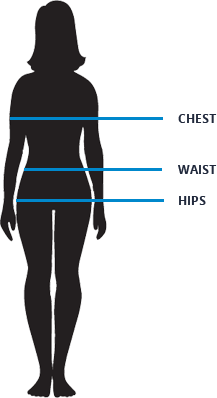
| size | chest(in.) | waist(in.) | hips(in.) |
|---|---|---|---|
| XS | 34-36 | 27-29 | 34.5-36.5 |
| S | 36-38 | 29-31 | 36.5-38.5 |
| M | 38-40 | 31-33 | 38.5-40.5 |
| L | 40-42 | 33-36 | 40.5-43.5 |
| XL | 42-45 | 36-40 | 43.5-47.5 |
| XXL | 45-48 | 40-44 | 47.5-51.5 |


Reviews
There are no reviews yet.